
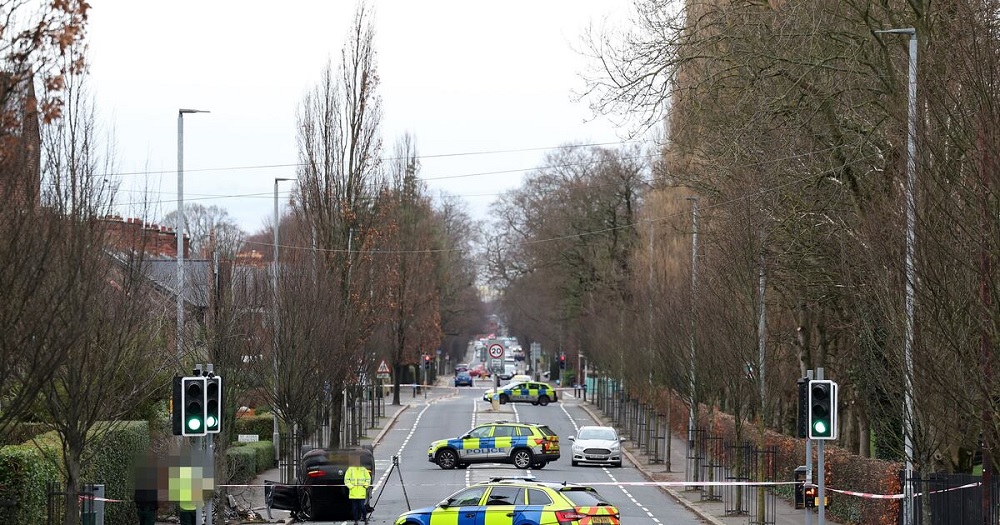
A collision at a busy junction can be significantly more difficult to reconstruct than an accident on a straight road. Several vehicles may be moving in different directions, separate traffic lights may control individual lanes, and pedestrians or cyclists may be crossing at the same time. Once the vehicles have been moved and traffic begins flowing again, important details can disappear.
People making road accident enquiries in Belfast may therefore require more than photographs of vehicle damage. Evidence relating to lane positions, signal phases, intended movements and the physical layout of the junction can be important when establishing how the collision developed.
Why Junction Accounts Frequently Conflict
Drivers approaching the same junction experience it from different positions. One driver may be travelling straight ahead, another turning across traffic, and a third entering from a side road or filter lane.
Each person may remember only the signal, lane and movement relevant to them. Their accounts can consequently appear contradictory even when they are attempting to describe the event honestly.
Belfast junctions can introduce additional complexity through bus lanes, pedestrian crossings, cycle facilities and lanes that divide or merge over short distances. Temporary roadworks may also alter a familiar layout.
A reliable assessment should therefore consider the complete junction rather than focusing only on the point where the vehicles made contact.
Establish the Intended Movement of Each Vehicle
A vehicle’s final position may not reveal what its driver intended to do before the impact. The vehicle could have rotated, been pushed or continued moving after the first contact.
For each vehicle, the available evidence should establish whether it was:
- Travelling straight ahead
- Turning left or right
- Changing or merging lanes
- Entering from a side road
- Exiting a roundabout
- Moving from a stationary position
- Responding to a separate filter signal
A simple sketch prepared shortly after the accident can help preserve these movements. It should show the relevant roads, lane directions, approximate vehicle positions and intended paths.
The sketch does not need to be technically precise. Its purpose is to preserve the driver’s genuine recollection before later discussions or assumptions affect it.
Identify the Correct Traffic Signal
A statement that a traffic light was green may not resolve a junction dispute. Complex junctions can have separate signals for straight-ahead traffic, turning lanes, buses, cyclists or pedestrians.
The driver should identify exactly which signal they were observing and where it was positioned. A green light applying to one lane may not authorise movement from another.
It is also useful to record whether a larger vehicle, roadside structure, temporary sign or overgrown vegetation obstructed the view. If the signal became visible only after reaching a particular position, that detail may matter.
Witness accounts about signal colour require similar care. A pedestrian standing on another corner may have been watching a different signal from the one controlling the driver’s lane.
Photograph the Junction, Not Just the Vehicles
Close photographs of damage can show where contact occurred, but they rarely explain the wider traffic arrangement.
Wide photographs should capture lane arrows, dividing lines, stop markings, traffic lights, pedestrian crossings and the approaches to the junction. Medium-distance images may show the relative positions of the vehicles, while close photographs can document specific damage.
Temporary features should be recorded carefully. Cones, diversion signs and altered lane markings may be removed soon after the accident, leaving later visitors with a different layout.
Evidence should be gathered only from a safe position. No photograph is worth stepping into moving traffic or obstructing emergency services.
Consider the Perspective of Each Witness
A busy Belfast junction may have numerous potential witnesses, including pedestrians, cyclists, bus passengers, delivery drivers and people working in nearby premises. However, not every witness will have observed the complete event.
One person may have watched a vehicle enter the junction but lost sight of it behind traffic. Another may have heard the impact and looked towards the road only afterwards.
A useful witness account should establish:
- Where the witness was positioned
- Which direction they were facing
- Whether anything obstructed their view
- When their attention was drawn to the vehicles
- Which signal, if any, they could see
- What they observed before and after the impact
Witnesses should provide their own recollections. They should not be shown a prepared account and asked to confirm it.
Secure Video Evidence Promptly
Dashcam footage may show lane position, signal changes or the behaviour of surrounding traffic. The relevant recording should be protected before the device overwrites it.
A suitable period before and after the collision should be preserved. The approach to the junction may be more informative than the moment of impact, while later footage may show vehicle movement and events at the scene.
Nearby businesses, buses, taxis or residential properties may also have cameras. Their presence does not guarantee that usable footage exists or will be released. Any enquiry should identify the exact location, date and approximate time.
Original recordings should remain unchanged. Editing or compressing a clip can remove context and create questions about whether the footage is complete.
Use Vehicle Damage Carefully
The position and direction of vehicle damage may help explain how contact occurred. Damage to the front of one vehicle and the side of another may be consistent with certain movements, but it does not provide a complete reconstruction.
Vehicles can rotate or be pushed after the first impact. A multi-vehicle accident may also involve several separate contacts.
Scene photographs, repair documentation and professional inspection records may assist. Technical conclusions should be left to appropriately qualified specialists rather than based on assumptions made at the roadside.
Vehicle damage should not be used to diagnose an occupant’s injury. Medical consequences require separate clinical assessment.
Account for Pedestrians, Cyclists and Bus Lanes
Not every significant road user needs to have been struck. A driver may brake or change direction in response to a pedestrian, cyclist or bus that was not directly involved in the final impact.
The sequence may therefore require consideration of pedestrian signals, cycle crossings or vehicles entering and leaving bus lanes.
A witness who observed this wider interaction could provide valuable context despite not seeing the moment of contact clearly.
The presence of another road user should be recorded factually. Responsibility should not be attributed without evidence showing what that person did and how it affected the collision.
Understand the Role of the PSNI
The Police Service of Northern Ireland may attend a collision where someone is injured or where the scene presents a danger to other traffic. Officers may identify the parties, record vehicle positions, obtain witness information and investigate whether an offence occurred.
This police function is separate from determining civil liability. Police attendance, an incident reference or a decision about prosecution does not automatically decide an insurance claim.
Where a Collision Report Form or other police information exists, insurers or legal representatives may be able to request the available material through the appropriate procedure.
Drivers should retain any reference number and officer information provided at the scene.
Reconstruct the Event Before Discussing Responsibility
A useful junction reconstruction follows a clear sequence:
- Each vehicle’s approach and lane position
- The signal or road instruction applying to that lane
- The driver’s intended movement
- Any obstruction or unexpected event
- The first point of impact
- The movement of the vehicles afterwards
This method is more reliable than beginning with an allegation of fault and selecting only the evidence that appears to support it.
Where a fact remains uncertain, the uncertainty should be acknowledged. A missing signal phase or unclear lane position should not be replaced with speculation.
Creating a Clear View of a Complex Junction Collision
Junction accidents often involve simultaneous movements and incomplete observations. No single photograph, statement or recording may provide the full answer.
The strongest assessment combines the physical layout, signal arrangements, lane markings, witness perspectives, original footage and comparative vehicle damage. Each piece of evidence should be used only for the question it can genuinely address.
Even detailed evidence cannot guarantee that liability will be determined in a particular way. It can, however, turn a confusing Belfast junction collision into a structured sequence that insurers and legal advisers can examine more accurately.


